
Writing Your First Club Match Report: A Simple Checklist for Volunteers
The final whistle goes. Players shake hands, someone's dad starts folding the touchline flags, and the clubhouse begins to fill. That's the moment you remember you agreed to write the match report. Nobody volunteers for this job twice unless they have a system — and a system is all it is.
You don't need to be a journalist. A club match report is a record for the people who were there and the people who weren't: the second XV lads playing at the same time, the grandparents who couldn't travel, the players who'll read it on the bus on Monday morning. Get the score, the names and the turning points right and you've done the job properly. Here's how to make sure you leave the ground with everything you need.
Before You Leave the House
Ten minutes of preparation saves you an hour of guessing later. Charge your phone, and pack something to write on that fits in a coat pocket — a small notebook beats a phone in the rain, and a phone beats nothing when your pen dies.
- Team sheets for both sides, printed or screenshotted. Check the league app, both clubs' social pages, and the programme if there is one.
- A pen. Then a spare pen.
- Kick-off time, venue and who the opposition actually are — not just "the team in blue".
- The referee's name, and the name of the competition. You will forget both by full time.
- A note of the conditions: wet, windy, frozen, or a pitch that's cutting up badly. Weather explains half of what happens in a game.
Keep a Timeline, Not a Story
The single biggest mistake first-time reporters make is trying to write sentences during the game. You will miss the next three phases while you finish the last one. Instead, keep a running list: the minute, the score at that point, and a few shorthand words about what happened.
Something like 14' 0-0 — No.8 breaks blind, held up 5m out is enough. Later, that becomes a proper paragraph. So does 52' 12-10 — chargedown, winger scores in the corner.
For every incident worth noting, capture the same six things:
- The minute, as best you can judge it.
- The score at that moment, so you never have to reconstruct it.
- The player's surname and shirt number — for both teams, not just yours.
- Where on the pitch it happened.
- How it started: scrum, lineout, turnover, kick, penalty.
- What it led to: try, penalty, yellow card, a momentum shift.
Write down the half-time score in big letters and circle it. It's the fact you'll second-guess most.
The Moments You Must Not Miss
You don't need to record everything. You need the five or six moments that explain the game.
The first score
Who scored it, how, and how long it took to come. If it arrived after twenty minutes of pressure, say so.
The swing
Every match has one — a yellow card, a length-of-the-field interception, a scrum that suddenly starts going backwards, a kick that finds touch instead of grass. Find it and build your report around it.
The decisive score
The try or penalty that settled it, whether that was in the 78th minute or the 30th.
Milestones
First cap, 50th appearance, a player back from a long injury, a prop scoring his first try in six seasons. These are the lines families screenshot and share. Ask a committee member before kick-off if anything is being marked today.
The last play
What the final minute looked like. A team camped on the opposition line, or a ball kicked dead with relief. It's how people remember the match.
Quotes: Get Them in the First Ten Minutes
After twenty minutes, the coach is holding a pint and talking about something else entirely. Catch them while it's fresh.
Two questions will get you nearly everything you need. Ask the coach: "What changed after half time?" And ask a captain or a player who had a good game: "What was working for you out there?"
Record on your phone if they're happy for you to, and ask permission first. If they'd rather not be quoted, that's fine — write it down as background and use it to shape the piece instead. Keep whatever you use to a sentence or two. One honest line beats a paragraph of platitudes, and if a coach tells you "we lost the collisions after the break", that's your pull quote right there. Check the spelling of every name before you type it up, and check their role or job title if you plan to mention it.
Facts to Double-Check Before You Write
The score is the one thing you cannot get wrong. Confirm it with the referee or with someone from the opposition before you leave, and make sure you agree on it. Then check your try scorers, conversions, penalties and drop goals against the same source.
If you're unsure whether something counted — a try disallowed, a penalty reversed — write "no score" and move on. A blank line is a hundred times better than a wrong one, and you can always confirm with the coach the next day.
Writing It Up in Forty Minutes
Do it the same evening, or first thing the next morning while the game is still in your head. Keep it to roughly 300 to 500 words.
Open with the essentials in one line: the score, both teams, the competition, and a phrase that says what kind of game it was. Then work through the first half, the second half, and the turning point you identified. Drop your one or two quotes where they carry most weight — usually after the swing or at the end. Close with the next fixture.
Write in plain sentences and past tense. Players' surnames, correct numbers, no nicknames unless everyone in the club uses them. If a passage of play was scrappy, say it was scrappy. Warm and honest reads better than polished and vague.
File It While It's Still Fresh
Send it to whoever runs the website with a headline, a photo or two, and any tags they use. If nobody took pictures, ask on the club group chat — someone's phone will have a decent shot of the try or the team huddle. Caption your images with names, because that's the part that gets forgotten.
Then start a folder for the season and drop your notes in it. By the tenth report you'll have a shorthand that works for you, and you'll stop noticing the work at all. The first one is the hard one; after that it's just a habit, and a good one — those reports become the record of a season that would otherwise disappear by Monday.
Photo: Suzy Hazelwood / Pexels
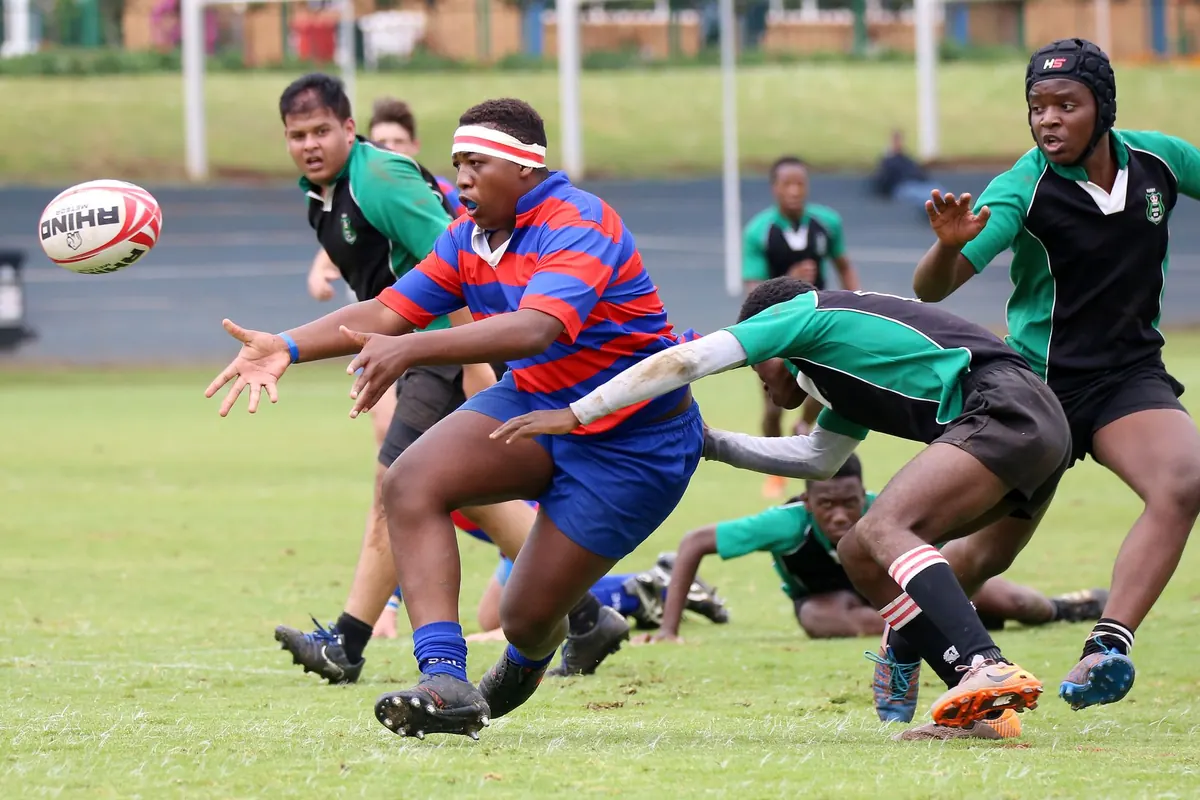
Headguards vs. Scrum Caps: Which One Do You Actually Need?
Scrum caps and headguards are the same category of kit with different amounts of padding. Here's how to...
How to Choose Your First Pair of Rugby Boots: A Buyer's Guide
Stud types, fit and surface matter more than brand or price. A practical guide to picking your first rugby...
About Us